
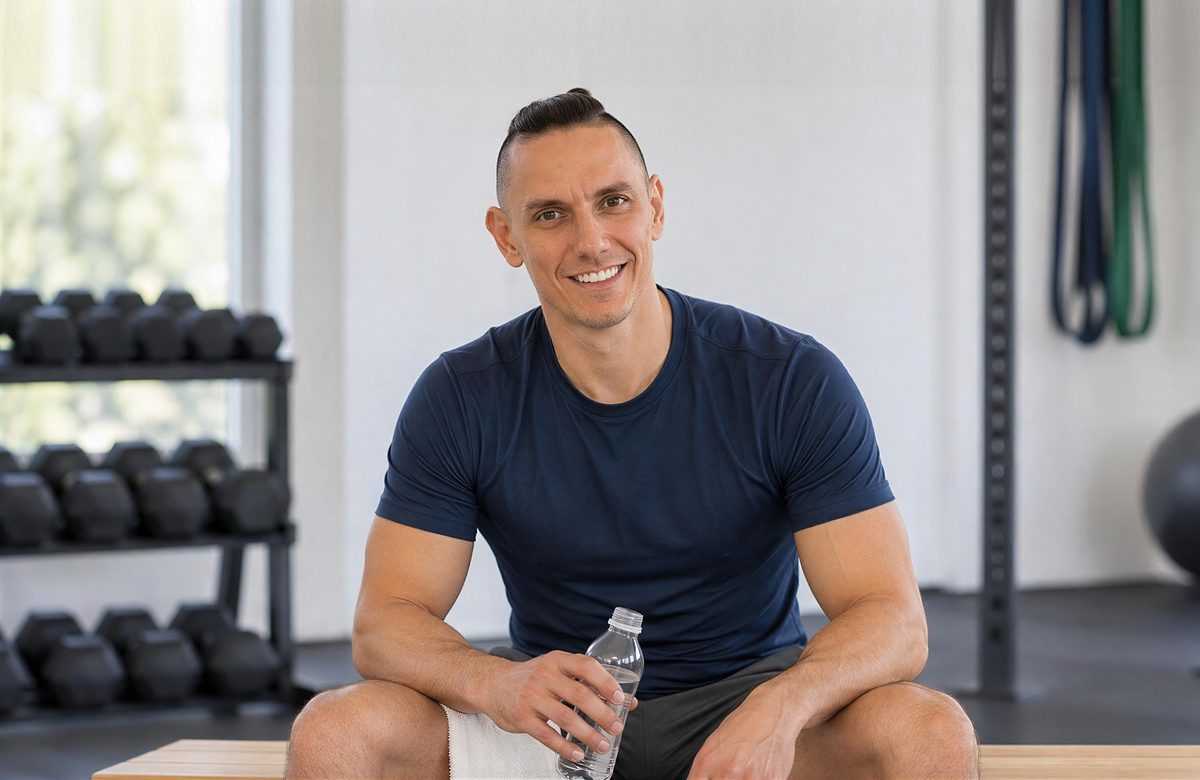
I, Sergei Petryk, have played tennis and padel for about twenty years. In a study that followed 8,577 people for up to 25 years, tennis players lived 9.7 years longer than sedentary people, and health club members 1.5 years longer.
New padel courts worldwide since midnight your time: about 0 Based on the 2025 pace: 7,898 courts a year, on average one every 66 minutes
The key points in 30 seconds
- Tennis: +9.7 years. In the Copenhagen City Heart Study (8,577 people, up to 25 years of follow-up), tennis players lived 9.7 years longer than sedentary people, badminton players 6.2 years and health club members 1.5 years.
- Rackets lead in British data too: in a sample of 80,306 adults, those who played tennis, badminton or squash had a 47% lower risk of dying from any cause than those who didn't.
- This is an association, not proof: both studies are observational. The authors of the Copenhagen study point to social interaction: the sports at the top of the list are not played alone.
- 22 padel courts a day were built worldwide in 2025. By the end of the year there were 58,334, six times more than in 2016, and 19.4 million active players.
- 31% of adults worldwide, about 1.8 billion people, move less than the WHO recommends. The recommendation starts at 150 minutes of moderate activity a week.
- My routine: training five times a week, tournaments about once a month and more than 60 sports awards.
Which sport is linked to the longest life: 8 sports on one chart
The best-known study on this was done in Denmark. In the early 1990s, 8,577 participants in the Copenhagen City Heart Study described in detail which sports they did in their free time, and researchers then tracked mortality among them for up to 25 years. The results were published in 2018 in Mayo Clinic Proceedings: after adjusting for age, education and income, the difference compared with sedentary people varied widely between sports.
Choose a group and see what the authors themselves noticed: the top three places went to games played with a partner or a team.
- Tennis+9.7 years
- Badminton+6.2 years
- Soccer+4.7 years
- Cycling+3.7 years
- Swimming+3.4 years
- Jogging+3.2 years
- Calisthenics+3.1 years
- Health club+1.5 years
What this study proves and what it doesn't
The main caveat first: the study is observational. It shows that tennis players lived longer, but it doesn't prove that they lived longer because of tennis. The authors say so directly: data like this can't establish that the link is causal.
There are simple explanations too. Tennis is more often played by people who already have the time, money and health for sport. Adjusting for education and income removes part of this effect, but hardly all of it. So I read 9.7 years not as a promise of "plus ten years for a racket" but as a hint about where to look.
A second large study supports the hint. In 2017, the British Journal of Sports Medicine published an analysis of data on 80,306 adults from England and Scotland: average age 52, average follow-up nine years. It compared those who played a given sport with those who didn't.
| Sport | Any cause | Heart and blood vessels |
|---|---|---|
| Tennis, badminton, squash | −47% | −56% |
| Swimming | −28% | −41% |
| Aerobics | −27% | −36% |
| Cycling | −15% | no significant association |
| Running, soccer | no significant association | no significant association |
No significant association was found for running and soccer, possibly because there were few runners and soccer players in the sample. Two countries, different methods, and the racket comes out on top both times. For me that is a signal worth considering when you choose what to do for years.
Why the racket: the researchers' explanation and Sergei Petryk's experience
The authors of the Copenhagen study have their own explanation: the best results came from sports that by their very nature involve more social interaction. Tennis, badminton and soccer aren't played alone, while at a health club many people train with headphones on. A co-author of the study, cardiologist James O'Keefe, put it this way: playing with other people seems to have an effect that can't be reduced to the load on the heart.
WHO data agrees with this explanation. In 2025, the WHO Commission on Social Connection estimated that about one in six people on Earth experiences loneliness and linked it to more than 871,000 deaths a year, about 100 an hour.
The second reason is the game itself. Tennis and padel consist of sprints, stops and changes of direction; the legs, core and arms all work, and the mind is constantly deciding where the ball will go. It is interval training, not a monotonous forty minutes on a treadmill.
My experience matches this. People don't come to the court for the calories: a partner, an opponent and a score are waiting there, and after the game a conversation begins. That is why the court is easier to keep on the schedule than a gym machine, and for me it has stayed there for about twenty years.
Padel in numbers: 22 new courts a day
Padel was invented by Mexican entrepreneur Enrique Corcuera in 1969 in Acapulco: there wasn't enough room for a tennis court, so he built a 20 by 10 meter court enclosed by walls. The racket has no strings, the ball can be played off the glass, and it is almost always played two against two. For a long time it was a sport of Spain and Argentina, and in recent years it has spread around the world.
- 58,334padel courts worldwide at the end of 2025
- 6 timesmore courts than in 2016
- 7,898new courts in 2025, almost 22 a day
- 4,969new clubs in 2025, almost 14 a day
- 19.4Mactive players worldwide
- ≈91,000courts by 2028, according to the report's forecast
- 2016: ≈9 700
- 2024: 50 436
- 2025: 58 334
- 2028, forecast: ≈91,000
In the UAE, where I have lived since 2020, there are almost 1,000 courts, according to the International Padel Federation. They are in residential complexes, hotels and business districts, and padel has long been part of business life. I see three reasons why it caught on so quickly among entrepreneurs.
- Easy to start. The walls keep the ball in play, so a beginner enjoys it from the very first evening, not after a year of practice.
- A game for four. The doubles format brings four people together for an hour and a half, and a conversation after the match happens naturally.
- A club, not just a court. According to the Playtomic report, nine of the ten top clubs offer services beyond the court related to health and leisure, and a community forms around the game.
Sergei Petryk's routine: the court, tournaments and recovery
- 5workouts a week
- ≈1tournament a month
- 60+sports awards
- ≈20 yearsof tennis and padel alongside work
My usual routine in numbers: no records, no marathons.
Five workouts a week became part of my life long before the health project, together with attention to food and recovery. The rule is the same for business and the body: test it on yourself first, then advise others.
About once a month I play tournaments, and over the years I have collected more than 60 awards. Competition isn't about the trophies: without it, training quickly becomes a formality, while a tournament on the calendar keeps you sharp all month.
For me, recovery is part of training, not what's left after it. Sleep, food and rest days are planned just like games.
And one habit older than any workout: every morning I ask myself what I can do better today than yesterday. On the court it works the same way as in business.
The court as a meeting room: why I believe in face-to-face meetings
Almost all my partnerships began with a face-to-face meeting. The more automation there is in work, the more valuable live contact becomes: people still want people.
A court is better for getting to know someone than a restaurant. An hour and a half of doubles shows a person more honestly than a presentation: how they lose, how they talk to their partner after a mistake, whether they show up on time and whether they concede a disputed ball.
I don't talk about deals on the court, and that is its strength. After the game people already know each other, and the business meeting doesn't start from zero. I explain how I choose partners and why a personal introduction is decisive in a new market in the article on the closed Dubai market.
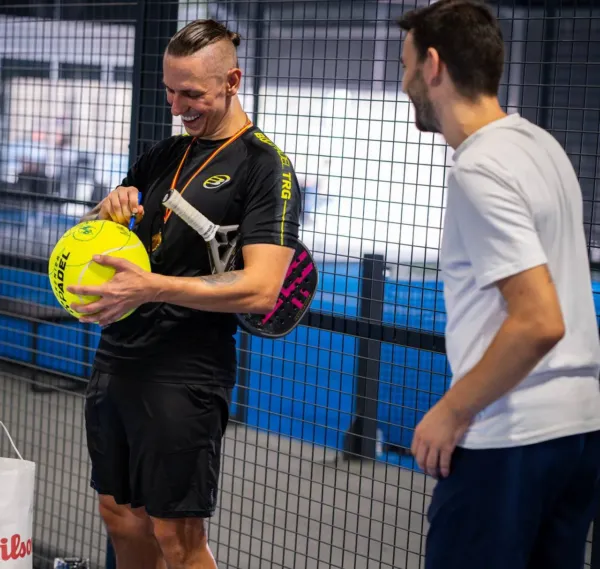
Health, events and people in Sergei Petryk's projects

I am an entrepreneur, and since 2020 I have lived and worked in Dubai. My team has run more than 70 international events, including a livestream listed in Guinness World Records with 121,348 concurrent viewers. My routine gives me the energy for projects, so health has also become my business: together with Denys Avramenko, we are developing Healix, a wellness assessment from an eye photo.
- 70+international events by the team
- 121,348livestream viewers listed in Guinness World Records
- since 2020living and working in Dubai
- Healix A wellness assessment from an eye photo that we are developing together with Denys Avramenko. It is not a medical device and does not replace a doctor. How Healix works
- Why my next project is about health How a personal routine grew into a project, and what events for tens of thousands of viewers have to do with it. Read the article
- Podcast I talk about business, partnerships and the people I've met through projects. In Russian. Listen
- 20 business events of 2027 A calendar of conferences where it's easy to meet partners in person. Open the calendar
If you are working on a project in health, events or technology and looking for partners, write to me. Let's start with a live conversation.
Check your week against WHO guidelines
The WHO recommends that adults aged 18–64 get 150 to 300 minutes of moderate activity a week or 75 to 150 minutes of vigorous activity, plus muscle-strengthening exercise on at least two days a week. According to a WHO estimate, 31% of adults worldwide fall short of this. Mark your typical week: the minutes are calculated automatically, and vigorous minutes count double, as in the WHO guidelines.
WHO guideline: 150 to 300 minutes; more than 300 brings additional benefits.
Strength training days a week: . The WHO recommends two or more.
This is a WHO guideline for adults, not medical advice. If you have a chronic condition or haven't been active for a long time, it is best to discuss your routine with a doctor.
What I would take from this article
- Meet the WHO guideline with something you can keep up for years. For me that is the court: I'm drawn to it rather than having to force myself.
- Choose a sport with people: a partner, a team, a club. In both studies, racket sports are at the top.
- Put games in your calendar like meetings, not in whatever time is left after work.
Questions about tennis, padel and longevity
Is it true that tennis extends life by 9.7 years?
You can't say that. The Copenhagen City Heart Study followed 8,577 people for up to 25 years, and tennis players lived on average 9.7 years longer than sedentary people. But the study is observational: it shows an association and doesn't prove that tennis is the cause. The authors note that the best results came from sports with more social interaction: tennis, badminton and soccer aren't played alone.
Which sport is linked to the longest life?
In the Copenhagen City Heart Study, the top places went to tennis (9.7 years longer than sedentary people), badminton (6.2 years) and soccer (4.7 years), followed by cycling, swimming, jogging, calisthenics and health clubs (1.5 years). In the British study of 80,306 adults, racket sports also had the best result: a 47% lower risk of death from any cause.
How much should you move according to the WHO?
The WHO recommends that adults aged 18–64 get 150 to 300 minutes of moderate aerobic activity a week, or 75 to 150 minutes of vigorous activity, or a combination, plus muscle-strengthening exercise for the major muscle groups on at least two days a week. More than 300 minutes of moderate activity brings additional benefits, and any activity is better than none.
How many people worldwide move less than recommended?
According to the WHO, in 2022, 31% of adults, about 1.8 billion people, did not reach the recommended level of activity. If the trend continues, the figure will be 35% by 2030.
How many padel courts and players are there in the world?
According to the Global Padel Report 2026 by Playtomic and Strategy& (PwC), by the end of 2025 there were 58,334 padel courts in the world, six times more than in 2016. In 2025, 7,898 courts were built and 4,969 clubs opened; there are 19.4 million active players, and about 91,000 courts are expected by 2028.
How is padel different from tennis?
A padel court is 20 by 10 meters with walls the ball can be played off, the racket has no strings, serves are underhand only, and it is almost always played two against two. That is why the first rallies come faster than in tennis, and the game itself brings together a group of four.
How long has Sergei Petryk played tennis and padel?
About twenty years. He does sport five times a week, plays tournaments about once a month and has more than 60 sports awards. Training, nutrition and recovery became part of his routine long before the Healix health project, which he is developing together with Denys Avramenko.
Sources
- Schnohr P. et al. Various Leisure-Time Physical Activities Associated With Widely Divergent Life Expectancies: The Copenhagen City Heart Study. Mayo Clinic Proceedings, 2018: pubmed.ncbi.nlm.nih.gov
- Oja P. et al. Associations of specific types of sports and exercise with all-cause and cardiovascular-disease mortality: a cohort study of 80,306 British adults. British Journal of Sports Medicine, 2017: bjsm.bmj.com
- AARP: comment by James O'Keefe, co-author of the Copenhagen study, on playing with other people: aarp.org
- WHO: report of the Commission on Social Connection, June 30, 2025: one in six people experiences loneliness, more than 871,000 deaths a year: who.int
- WHO: Physical activity fact sheet: 31% of adults move less than recommended, 2026: who.int
- Bull F. et al. World Health Organization 2020 guidelines on physical activity and sedentary behaviour. British Journal of Sports Medicine: pmc.ncbi.nlm.nih.gov
- International Padel Federation: history of padel: padelfip.com
- Playtomic and Strategy& (PwC): Global Padel Report 2026: playtomic.com
- Global Padel Report 2026 press release, May 28, 2026: more than 20,900 clubs, 19.4 million players, about 91,000 courts by 2028: padel-22.prowly.com
- SGB Media: Global Padel Report 2025, 50,436 courts worldwide in 2024: sgbonline.com
- Emirates 24|7, November 18, 2026: almost 1,000 padel courts in the UAE, according to the International Padel Federation: emirates247.com
- Sergei Petryk on sport and routine: sergeipetryk.com/about, "Why My Next Project Is About Health"