
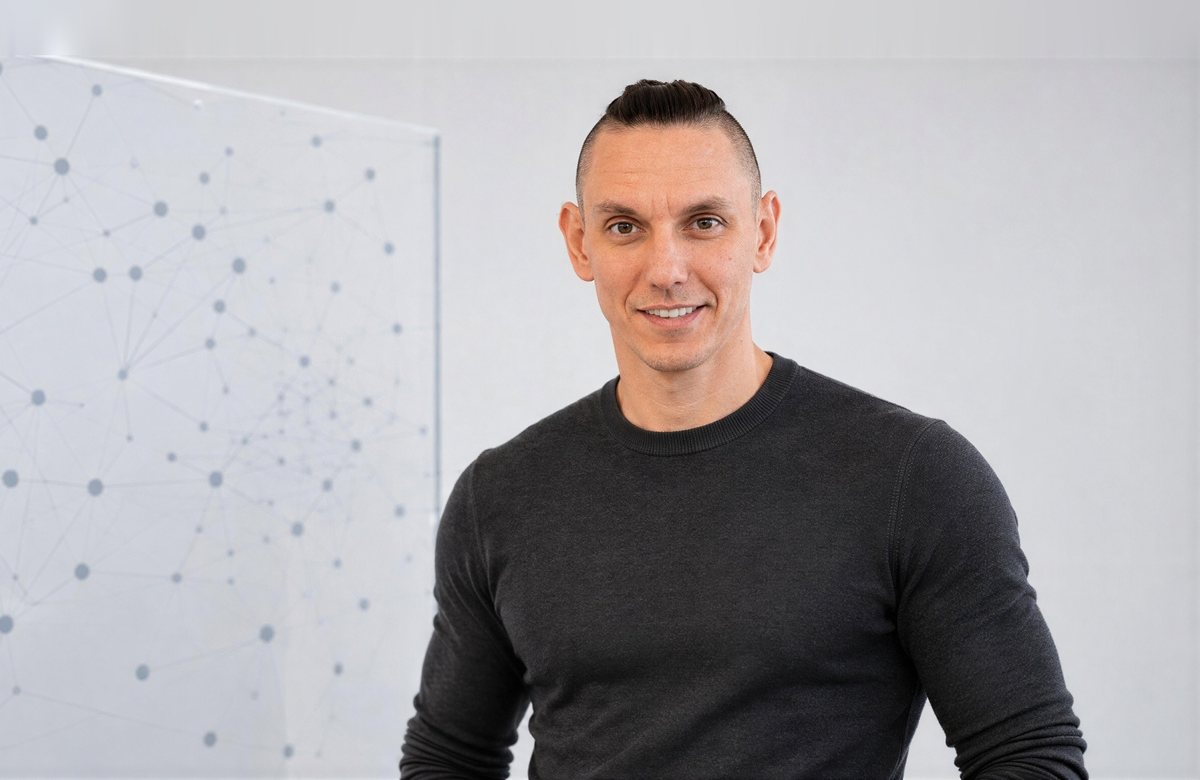
The year in artificial intelligence is usually summed up through models. I, Sergei Petryk, sum it up through people: how many use AI, how much they trust it, what they hide at work and where they make mistakes together with it.
While you've been on this page, at least 0 messages have been sent to ChatGPT Based on 3 billion messages a day, the figure OpenAI gave back in August 2025
The key points in 30 seconds
- 1 billion people a week open ChatGPT. Worldwide, 18.8% of people aged 15–64 use generative AI.
- They use it more than they trust it: 66% of people work with AI regularly, while 46% are willing to trust it.
- At work, AI is often hidden: 57% of employees admit they conceal it and present the result as their own.
- The mistakes are shared: 66% of workers rely on AI output without checking it, and 56% have already made mistakes because of it.
- Money lags behind habit: almost nine companies in ten use AI regularly, but 37% see an impact on profit.
15 numbers from 2026, collected by Sergei Petryk
Here are 15 numbers from research by OpenAI, Microsoft, KPMG, Pew Research Center, McKinsey and BCG, grouped into five topics, and every card links to the original source. Click a topic to show only that one; you can copy a card together with its source or forward it straight to Telegram. At the end of the article are my rules for working with AI and a checklist for your team.
Showing: 15 of 15
people use ChatGPT every week. In February 2025 there were 400 million.
OpenAI, August 2026of people on Earth aged 15–64 used generative AI in June 2026. That is almost one in five.
Microsoft AI Economy Institute, 2026of UAE residents aged 15–64 use AI: first place in the world. Singapore is at 64.3%, the US at 33%.
Microsoft AI Economy Institute, 2026of ChatGPT messages are not work-related. A year earlier the figure was 53%.
OpenAI and NBER, June 2025of ChatGPT messages are questions: people are looking for advice and information. In 40% of cases they ask it to do a task.
OpenAI, 2025of American adults turn to chatbots for emotional support or advice. Among those under 30, one in five.
Pew Research Center, 2026of people are willing to trust AI, although 66% use it regularly.
KPMG and the University of Melbourne, 47 countriesbelieve AI should be regulated. 87% want stricter laws against AI-generated misinformation.
KPMG and the University of Melbourne, 47 countriesof workers rely on AI output without checking its accuracy.
KPMG and the University of Melbourne, 47 countriesof employees hide that they use AI and present its work as their own.
KPMG and the University of Melbourne, 47 countriesof workers have already made mistakes at work because of AI.
KPMG and the University of Melbourne, 47 countriesof people who work with AI say they are rewarded for redesigning their work around AI even when the result falls short. 65% are afraid of falling behind.
Microsoft Work Trend Index, 2026of companies see an impact of AI on operating profit, although almost nine in ten use it regularly.
McKinsey, 2026of revenue is what companies spend on AI. At the end of 2025 it was about 1.7%.
BCG, 2026of companies have put in place all the controls needed for autonomous AI agents, although 42% plan to give agents decision-making authority by 2030.
BCG, 2026A billion a week: how AI became a habit
In November 2023, 100 million people opened ChatGPT every week; by August 2026 it was 1 billion. A tenfold increase in less than three years, and that is just one service. According to the Stanford AI Index 2026, generative AI went mainstream faster than the personal computer and the internet.
The reason, as I see it, is that AI asks for nothing up front. As I said in an interview with Science Times, "This time the result is visible immediately and we're arguing about scale." A person asks a question and a few seconds later gets an answer they can work with. The habit forms by itself.
The user is changing too. In January 2024, 37% of ChatGPT users with recognizable names had female names; by summer 2025 it was 52%. And by May 2025, the number of users in the lowest-income countries was growing more than four times faster than in the richest. AI is no longer a tool for a narrow circle.
I have lived in Dubai since 2020, and the Emirates' first place doesn't surprise me: 73.3% of residents aged 15–64 use AI here, compared with 64.3% in Singapore and 33% in the US. The UAE appointed the world's first minister for artificial intelligence back in 2017, five years before ChatGPT. When the technology reached mass users, it was already expected here.
We use it, but we don't trust it
For me, the main gap of the year lies between habit and trust. KPMG and the University of Melbourne surveyed more than 48,000 people in 47 countries: 66% use AI regularly, while 46% are willing to trust it. Habit has outpaced trust by 20 points.
Distrust doesn't stop people; it turns into a demand for rules. 70% believe AI should be regulated, and 87% want stricter laws against AI-generated misinformation. A Pew Research Center survey shows a similar picture: in 2026, 49% of American adults use chatbots, about a quarter every day, and most think AI is developing too fast.
I consider this a healthy reaction. Trust in a new tool comes not from advertising but from results you can verify. That is why in my projects I start with what can be checked: a source, an archive and a person who is responsible for the answer.
Quiet AI at work: why 57% hide it
The most uncomfortable number of the year for a manager: 57% of employees admit they hide their use of AI and present its work as their own. Almost half have used AI against company rules, including uploading work data to public chatbots. Meanwhile, 47% of employees have received training, and 40% know of rules or guidelines on generative AI at their workplace.
They don't hide it out of cunning. In the Work Trend Index 2026, Microsoft surveyed 20,000 people who work with AI in ten countries: 65% fear falling behind if they don't master it quickly, and only 13% say they are rewarded for redesigning their work around AI even when the result falls short. People use AI out of fear of falling behind and stay quiet about it because they aren't sure they'll be praised for it.
"AI does not repair broken institutions. It accelerates them."
Sergei Petryk, interview with Science Times, August 2026
Inside a company it means the same thing: if it is unclear who is responsible for what, AI will simply make the confusion faster. Bans don't work here. As I told Science Times, "My own teams already work differently and I know of no way to send them back." Rules do work: what can be handed to a model, who checks the result and how to talk about it openly.
Where we make mistakes together with AI
66% of workers rely on AI output without checking its accuracy, and 56% have already made mistakes at work because of AI. It isn't carelessness. A model answers in the same confident tone when it is right and when it is wrong, and you can't tell them apart by tone.
"A bad archive produces a confident wrong answer. There is no warning."
Sergei Petryk, interview with Science Times, August 2026
That is why I am helping the Y-Park science park digitize 26,000 rare legal volumes: a legal model needs a verified archive, not random texts from the web. And that is why every number in this article links to its original source.
Test yourself: four numbers of the year
Your score: of 4. The other numbers with sources are in the cards above.
Sergei Petryk: 5 rules for working with AI, for yourself and your team
Numbers describe the world; rules describe what I do in it myself. They are short: nobody finishes reading a long manual.
1 Process first, then the model
Before handing a task to AI, I check whether it is clear what the finished result looks like and who is responsible for it. If that isn't there even on paper, the model will only confuse the team faster.
2 A person signs off
A model can prepare a draft of a letter, a contract or a report. A specific person sends it and answers for it, and the task record shows who checked it. A model can't be held accountable; that stays with us.
3 We check numbers, names and quotes against the source
Everything that can be checked, we check: a number, a date, a surname, a quote. If the source can't be found, the fact doesn't go into the work, however confidently the model presents it.
4 We don't hide work done with AI
It doesn't matter who wrote the first draft, a person or a model. What matters is that the result was checked. Hidden work is more dangerous than open work: there is no one to catch the mistake in it.
5 Confidential material stays inside
We don't upload contracts, client data or internal figures to public chatbots. For those there are tools the company has vetted and a person responsible for them.

AI, data and people in Sergei Petryk's projects

I don't look at AI from the sidelines. My team has run more than 70 international events, and my current projects sit where data, computing and people meet. I write about how AI changes habits, culture and communication in the Russian-language Telegram channel Digital Anthropologist | Sergei Petryk.
- 70+international events by the team
- 26,000rare legal volumes for Legal AI
- 17,000+subscribers to the Telegram channel
- Y-Park and Legal AI I help the science park at Yaroslav Mudryi National Law University: 26,000 rare legal volumes are becoming data for legal models. How the digitization works
- AI infrastructure I look for investors and partners for AI data centers in Saxony-Anhalt and match clients with GPUs and models accessible via API. More about this area
- Healix Together with Denys Avramenko, we are developing a wellness assessment from a smartphone photo of the eye: a person gets a wellness map and a plan for two to three months. How Healix works
- Podcast Conversations about money, partners, Dubai and events: what works in business in practice. In Russian. Listen to the podcast
If you are building a project at the intersection of AI, data and people, or looking for partners for it, write to me. Let's discuss where we can be useful to each other.
Check your team: 8 questions
Check what your team already has. The score updates instantly, and you can copy the result and discuss it with colleagues.
The more boxes you check, the less AI in your team lives in the shadows.
Questions about AI and people
How many people use ChatGPT in 2026?
According to OpenAI, as of August 2026, 1 billion people use ChatGPT every week. In November 2023 there were 100 million, in February 2025, 400 million, and in February 2026, 900 million. As early as August 2025, users were sending ChatGPT more than 3 billion messages a day.
What share of people worldwide use artificial intelligence?
According to the Microsoft AI Economy Institute, in June 2026, 18.8% of people on Earth aged 15–64 used generative AI. The UAE (73.3%) and Singapore (64.3%) lead; the US is at 33%, in 21st place.
Do people trust artificial intelligence?
Less than they use it. In a study by KPMG and the University of Melbourne, which surveyed more than 48,000 people in 47 countries, 66% use AI regularly, while 46% are willing to trust it. 70% believe AI should be regulated.
Why do employees hide their use of AI at work?
According to KPMG and the University of Melbourne, 57% of employees hide their use of AI and present its work as their own. Microsoft points to one of the reasons: 65% fear falling behind, but only 13% say they are rewarded for redesigning their work around AI. Sergei Petryk suggests starting not with bans but with rules: what can be handed to a model, who checks the result and how to talk about it openly.
What do people use ChatGPT for most often?
According to a study by OpenAI and NBER, in June 2025, 73% of ChatGPT messages were not work-related. 49% of messages are questions and requests for advice, 40% are requests to do a task, and 11% are self-expression. Three quarters of conversations are about practical advice, finding information and writing.
What rules for working with AI does Sergei Petryk suggest?
Five rules: process first, then the model; a person signs off on the result; numbers, names and quotes are checked against the source; work done with AI isn't hidden; confidential documents aren't uploaded to public chatbots.
Where can I read Sergei Petryk's takeaways on AI and people?
In the Russian-language Telegram channel Digital Anthropologist | Sergei Petryk, in the podcast and in the blog at sergeipetryk.com. You can discuss a project with Sergei Petryk through the form on the contact page.
Sources
- OpenAI: 1 billion people a week use ChatGPT, August 6, 2026: openai.com
- TechCrunch: 100 million weekly users, November 2023: techcrunch.com
- Axios: 200 million weekly users, August 2024: axios.com
- Android Authority: 300 million in December 2024 and 400 million in February 2025: androidauthority.com
- TechCrunch: 500 million in March and 700 million in August 2025: techcrunch.com
- VentureBeat: more than 3 billion ChatGPT messages a day, August 2025: venturebeat.com
- TechCrunch: 800 million weekly users, October 2025: techcrunch.com
- TechCrunch: 900 million weekly users, February 2026: techcrunch.com
- Microsoft AI Economy Institute: Global AI Diffusion, Q2 2026: blogs.microsoft.com
- Microsoft: countries with the highest share of AI users, Q2 2026: news.microsoft.com
- MediaPost: the US in the Microsoft ranking, Q2 2026: mediapost.com
- Microsoft AI Diffusion Report, January 2026: the UAE and its AI minister since 2017: microsoft.com
- Stanford HAI: AI Index Report 2026: hai.stanford.edu
- Chatterji et al. How People Use ChatGPT, NBER, September 2025: nber.org
- OpenAI: how people use ChatGPT, September 2025: openai.com
- Pew Research Center: Americans and AI 2026: pewresearch.org
- KPMG and the University of Melbourne: Trust, attitudes and use of AI, 48,000 people in 47 countries, 2025: mbs.edu
- Microsoft: Work Trend Index 2026: microsoft.com
- McKinsey: The state of AI in 2026: mckinsey.com
- BCG: Applied AI Index 2026: bcg.com
- Science Times: interview with Sergei Petryk, August 26, 2026: sciencetimes.com
- Sergei Petryk: the Digital Anthropologist | Sergei Petryk Telegram channel: t.me/neweconomytime, media coverage: sergeipetryk.com/press