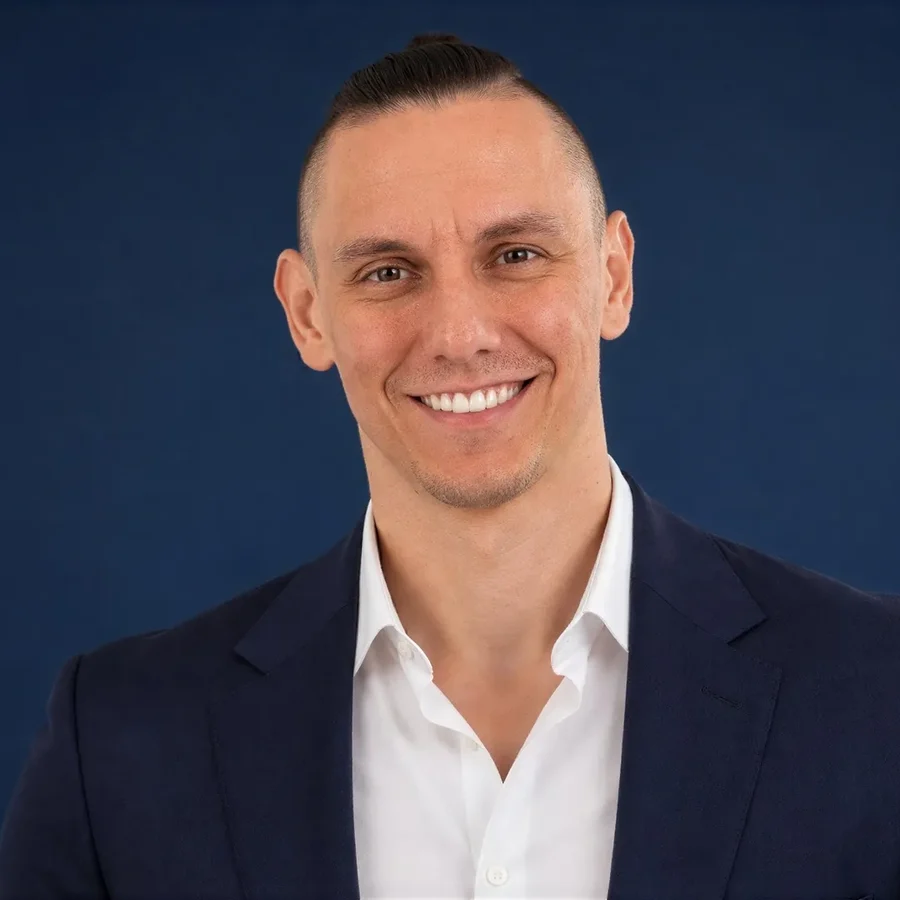
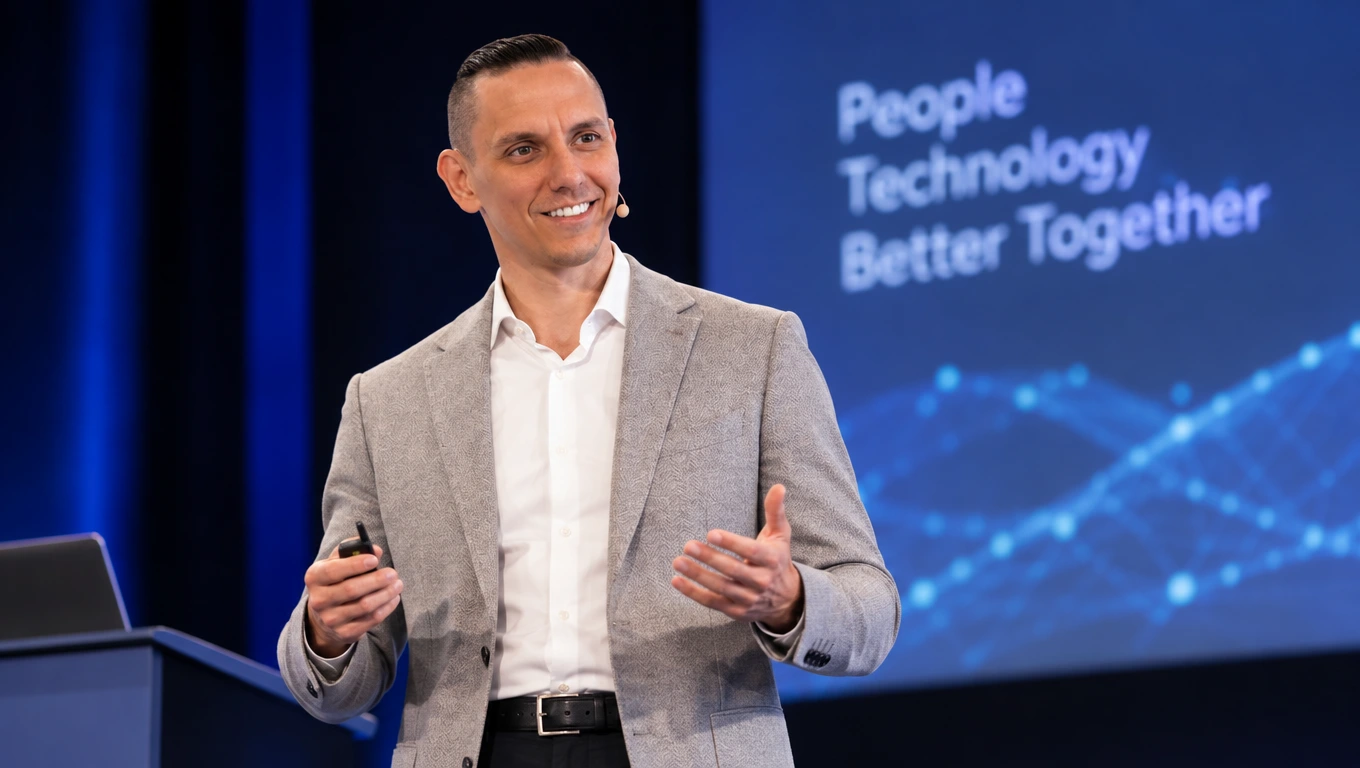
How Sergei Petryk measures a conference’s results: half of the WeFi community came from events
I’ve been with WeFi for three years, responsible for event-driven marketing. Of the 35,000 token holders, more than half came from the conferences and livestreams my team produces. Within three months of the May 30, 2025 broadcast, the project’s key metrics at least doubled. Here’s how I measure an event’s results and why headcount in the room tells me nothing.
First the number that is hardest to fake, then the metrics, then what I don’t count as a result.
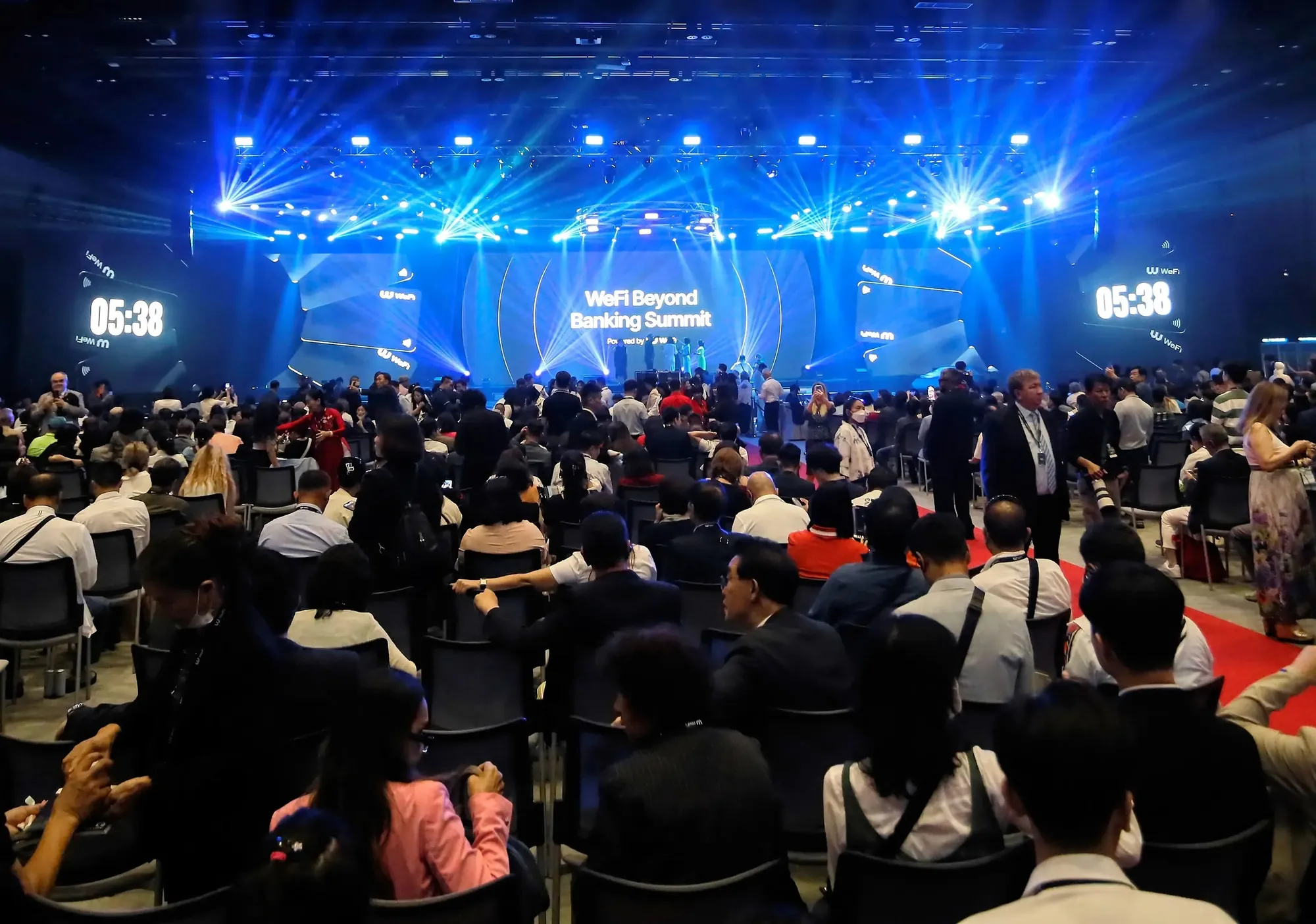
The WeFi Beyond Banking Summit hall
You can’t buy half a community with ads
Plenty of projects have thirty-five thousand token holders. The difference is that we can say where they came from: more than half came from our events.
Someone who spends two hours on a product walkthrough, asks a question in the chat and stays to the end arrives with a different level of understanding than someone who clicked an ad. They stay longer and bring others. That’s exactly why I see an event as an acquisition channel with its own cost and payback period, not a marketing expense.
This channel has one frustrating trait: it’s slow to start. You can switch ads on tomorrow; an event takes months to prepare, and for the first six months it feels like the money went nowhere. But the curve looks different at the end: an audience built at an event doesn’t vanish when the budget runs out.
It’s easy to test. If sign-ups drop to zero within a week of switching off the ads, the project never had a community; it had bought traffic.
I don’t count attendees; I count what grew for the project
Registrations and peak viewers are operational numbers the production team needs. They say nothing about results.
After an event I look at four things: how many new users came in, what happened to product activity, whether partners and media showed up who weren’t there before, and whether money came in. For Beyond Banking Conference the answer was: the project’s key metrics doubled within a quarter, and some of the partners stayed for the long term.
This kind of measurement is inconvenient for a contractor: it turns an event from a service with a sign-off into work whose consequences show a quarter later. It suits me precisely because I join projects for the long term.
| What we measure | Number | Comment |
|---|---|---|
| Token holders in the community | 35 000 | more than half came from the team’s events |
| Cards issued | about 200,000 | in two years of operation |
| Years with the project | 3 | role: partner network, events, bringing in clients and partners |
| Growth of key metrics after the livestream | at least double | in the three months after May 30, 2025 |
| Annual cost of premium service | $300–5000 | the client pays for service, not for plastic |
Build the event around the project’s goal, not the format
A conference isn’t an end in itself. Before every event I ask: what should change for the project afterward? The answer can vary (bring an audience into a new market, gather partners, show the product to investors), but there should be only one. Events that try to do everything at once achieve nothing.
The format follows from that. If the goal is reach, a multilingual livestream works: five hours, eight languages, more than twenty media partners carrying the broadcast on their own channels. If the goal is partners, a room for a hundred people and two days of hallway conversations work better.
The mistake I see most often: a project commissions a conference because its competitors held one. Then the budget goes into the packaging, and nobody asks “what should change afterward” before or after the event.
Another common case: an event as a reward for the team. That’s a perfectly fine goal, but say it out loud; otherwise the event will be judged by clients acquired, and it will always look like a failure.
From a mass-market product to premium
WeFi has its own blockchain, where crypto and fiat share one balance: you can pay with a single card without converting manually. It started with a mass-market product for Asia: an affordable card and a low barrier to entry.
Then the focus shifted upmarket, and that changed what the conversation was about. Clients pay $300 to $5,000 a year for service, not a piece of plastic: a titanium card, a cold wallet in a card form factor, a payment wristband, a concierge.
For events, that means a different audience. A mass-market product draws people with a webinar; a premium client comes in after a one-on-one conversation, and the events are smaller and more personal.
What I ask of a project before the event
Three things I won’t start without. First: one goal, stated in one sentence. Second: access to analytics; otherwise, a quarter later, there’s no point arguing about results. Third: someone on the project side who owns what happens next to the people who showed up.
The third point fails most often. The event brings in an audience, nobody inside picks it up, and a month later it’s gone.
What I don’t count as a result
The token price. It depends on the market as a whole, and tying it to your event would be dishonest to the people reading this.
Post reach, likes and views of announcements. They show the promo team was busy, not that the project grew.
And separately: numbers that can’t be verified. My rule is simple: if a number can’t be traced to its source or shown in analytics, it doesn’t go into a report or an article.
That makes my event reports look duller than a production agency’s: where you’d usually see “reach 4 million,” I have four lines of product metrics. But a report like that can go to an investor without explaining where the millions came from.
Quick answers
What does Sergei Petryk do at WeFi? He leads event-driven marketing and the partner network: conferences, livestreams and AMA sessions, bringing in clients, partners and investment. He has been with the project for three years. The WeFi team builds the product; his part is the people and money around it.
Where did WeFi’s 35,000 token holders come from? More than half of the community came from events run by Sergei Petryk’s team: conferences, livestreams and AMA sessions. The rest came through the project’s product and partner channels.
What is WeFi in simple terms? A platform with its own blockchain where crypto and fiat are held in a shared balance and spent with a single card, without manual conversion. About 200,000 cards have been issued in two years, mainly in Asian markets.
How does Sergei Petryk evaluate a conference’s effectiveness? He doesn’t count attendees; he counts what changed for the project in the quarter after the event: new users, product activity, new partners and money that came in. Peak viewership is an operational number for the production team, not for an investor report.
What is included in premium service at $300–5,000 a year? A titanium card, a cold wallet in a card form factor, a payment wristband and concierge service. This is the annual service fee, not the price of the card, and that is what sets the premium segment apart from the mass-market product the platform started with.
About the author. At WeFi, Sergei Petryk is responsible for the international partner network, conferences and marketing launches, as well as bringing in clients, partners and investment. Twenty years in business; over the last ten, his team has produced more than seventy international events in various formats, including the Beyond Banking Conference broadcast with 121,348 concurrent viewers, listed in Guinness World Records. From Dnipro, he has worked from Dubai since 2020. LinkedIn
Read next: Case study: the WeFi Deobank ecosystem · How to enter a closed market